An Assemblage of Archaeologists
- Mishkat Bhattacharya
- 23 hours ago
- 2 min read

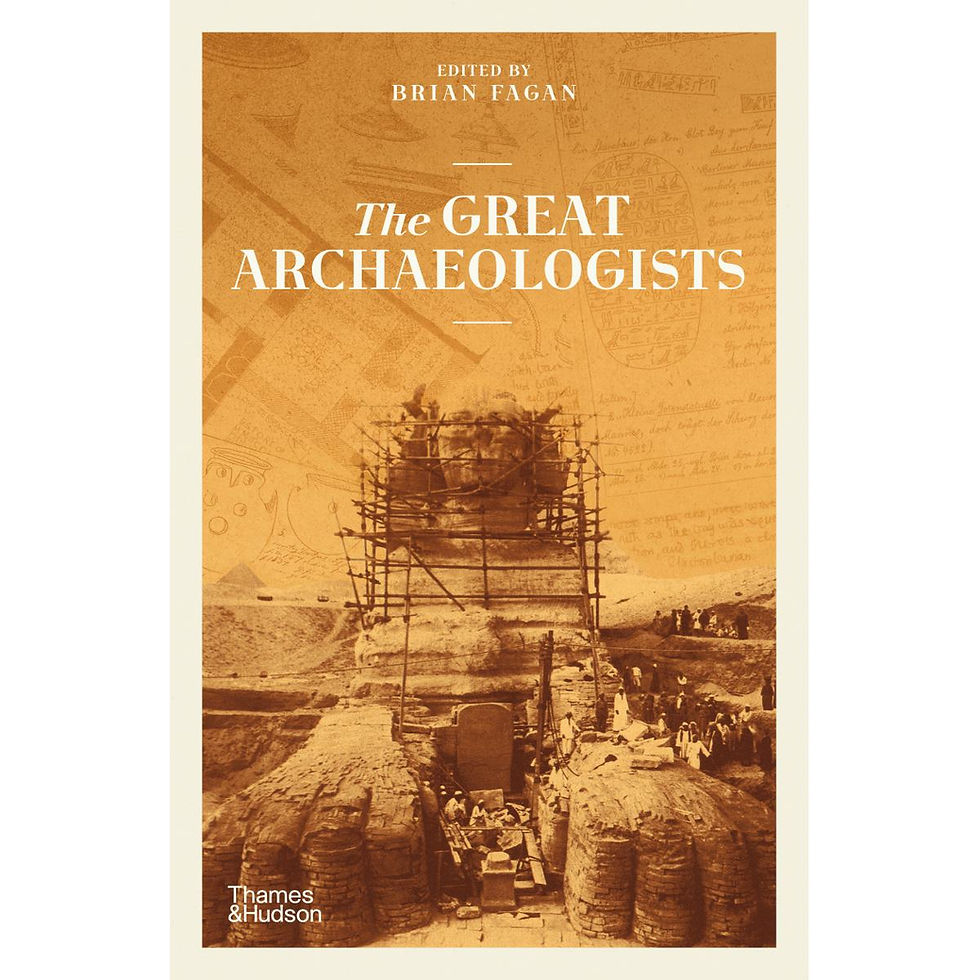
This post is a short review of the book The Great Archaeologists (2014, 304 pages), edited by Brian Fagan.
The book is a collection of biographical portraits of about 70 pioneering archaeologists, written by prominent professionals in the field.
Each entry is short (about 3-5 pages) and the book moves along at a clip. It's strength in my opinion is in the breadth of coverage it provides.
I have listed some of the categories I enjoyed finding in the book.
Usual suspects: The famous ones of course find themselves here - Schliemann (who discovered Troy), Howard Carter (King Tut's tomb), Kathleen Kenyon (Jericho), Sir Arthur Evans (Minoan civilization), Mary & Louis Leakey (Olduvai Gorge), Sir Mortimer Wheeler (Harappa and Mohenjo-Daro), etc. Their discoveries are described in short, but retain the drama in their description.
Important but less known: These are names that are important but we may not be carrying around in our heads (at least I was not): Lepsius (Egypt), Pei Wenzhong (Sinanthropus Pekinensis), Okladnikov and Semenov (early Russian history), etc.
Getting it Write: The book includes the decipherers of ancient scripts, such as Champollion (hieroglyphics), Rawlinson (cuneiform), Ventris (Linear B - I knew about him because I happened to visit Crete), Thompson & Proskourikoff & Knorosov (Maya), etc.
Thinkers: This was an unusual category. It consists of professionals who are neither field excavators, nor examiners of manuscripts or arrangers of historical artefacts. Instead they pioneered ways of thinking about history, systematizing chronologies, and accounting for cultural advances: de Mortillet, Montelius, Gordon Childe, Bruce Trigger. etc.
Summary
The book is full of curiosities and amusing bits and pieces humanizing the archaeologists. Many of them are eccentric and idiosyncratic characters. Their interactions with each other and the public are well described. Overall an informative and entertaining book.
Full disclosure: I should mention my mother was an archaeologist, so I have some bias towards the subject.
